Apartment

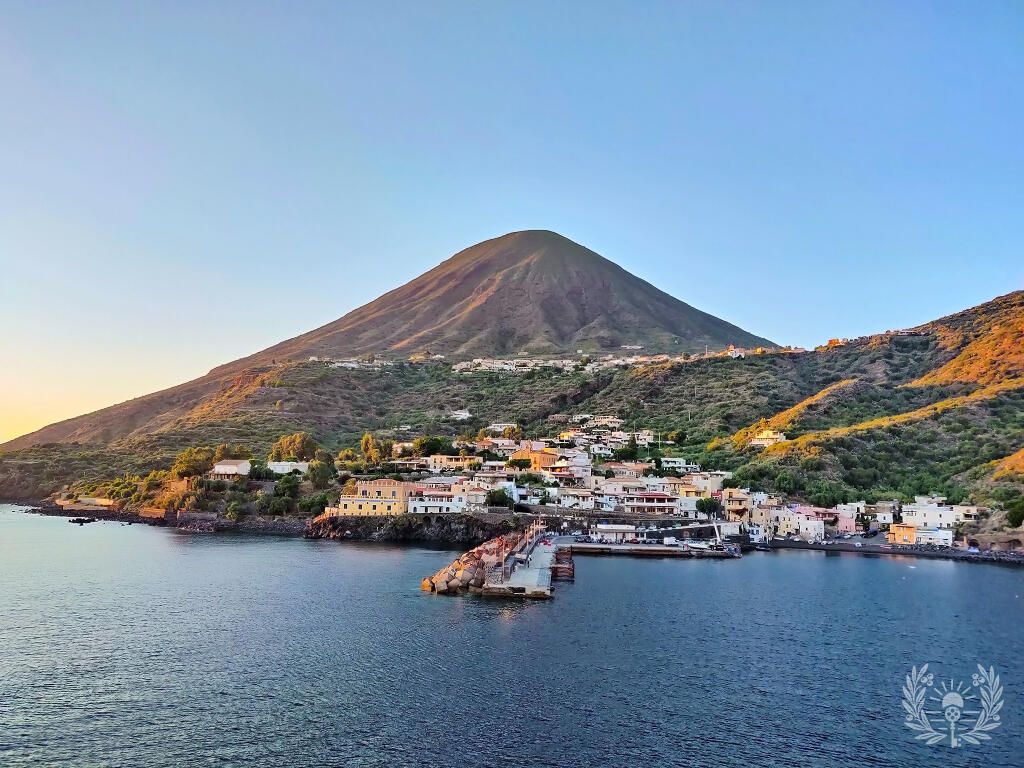
Stromboli is the northernmost of the Aeolian Islands, a 12.5 km² (4.8 sq mi) volcanic island north of Sicily in the Province of Messina. Its volcano has been active almost continuously for centuries and rises 924 meters (3,031 feet) above the sea, and it is the reason most visitors make the crossing.
The volcano gives the island its cone shape, and what you see from the boat is only its upper part. The base of the mountain lies about 2,000 meters (6,600 feet) below sea level, so from its foot on the seabed to the summit Stromboli measures close to 3,000 meters.
The explosions at the top show up from far away, especially at night, when the flames flare against the dark. In ancient times this earned the island the name "Lighthouse of the Mediterranean."
Small boats head out to sea and stop in front of the Sciara del Fuoco, the "fire slide." From there you can watch lava fountains of almost 100 meters (330 feet) light up. For anyone who does not want to make the climb, this is the way to see the volcano at work from the water.
A steep path leads up to the Pizzo at 918 meters (3,012 feet), what remains of the old crater rim. Along the way the trail passes distinct geological rock layers, and at the top you look down on the eruptions. Plan on three to four hours for the ascent, and expect to sweat.
The volcano is under constant monitoring. During periods of increased activity or larger eruptions, the climb is closed to visitors, so whether you can go up depends on how active Stromboli is at the time.
Most of the island's roughly 600 residents live in the village of Stromboli, which climbs from the port up to Piazza San Vincenzo. There are no cars. The only vehicles allowed are small electric transporters and motorized three-wheelers that supply the population, plus the residents' scooters.
The houses are cube-shaped. The square rooms are meant to keep them from collapsing during volcanic earthquakes, and a central inner terrace shelters the household from the wind, which blows across the sea almost all the time.
Ferries ("traghetti") and hydrofoils ("aliscafi") arrive at Scari, in the northeast of the island. Ferries can only dock here when the sea is calm. When the water is too rough, Stromboli is cut off from the outside world.
For swimming there are black lava beaches: Spiaggia Lunga, Ficogrande and the beach at Scari.
The tiny village of Ginostra, with about 30 residents, sits in the southwest. It has no roads, and donkeys are the only means of transport on its steep footpaths.
There are no climate figures for Stromboli itself here. A useful reference is the 1995–2024 (air) and 2023–2025 (sea) average for Sicily's north coast near Palermo: daytime highs reach about 30 C (86 F) in July and August, with the sea at around 27–28 C (81–82 F). In May highs are close to 23 C (73 F) and the sea about 19.5 C (67 F); in October highs are just over 23 C (74 F) and the sea is near 24 C (74 F). For a climb of several hours, months with highs around 23 C are easier than midsummer, while the sea is warmest from June through October.
Since ferries only dock in calm water, leave some slack in your schedule before a fixed onward connection. Stromboli suits travelers who like to get around on foot: the village has very little traffic, and Ginostra is reached only by footpaths.


A search on GetYourGuide lists guided tours, tickets and excursions for Stromboli and the surrounding area.
Advertising link: if a booking is made through this link, Terra Mia Immobiliare receives a commission from GetYourGuide.
The map comes from OpenStreetMap. Loading it sends your IP address to OpenStreetMap.