Vacation Home

Parco delle Madonie is a nature park in the Province of Palermo that rises from Sicily's northern coast to 1,979 meters on the Carbonara Massif. The Madonie combine mountain forest, meadows and cliffs with old villages such as Castelbuono and Gratteri, and more than 1,600 plant species have been recorded across some 40,000 hectares.
The protected area starts on the coast between Palermo and Cefalù and climbs inland to the Carbonara Massif, Sicily's second-highest elevation after Mount Etna. The Regione Siciliana, the island's regional government, created the nature reserve in 1989 to protect a range of plants and wildlife that stands out even by Mediterranean standards, and to safeguard the many historic and cultural sites scattered through the mountains.
Habitats in the Madonie have survived for thousands of years. Within 40,000 hectares, over 1,600 plant species have been cataloged, including rare and endangered species found nowhere else on Earth. The best-known is the Sicilian fir (Abies nebrodensis), of which only a small number of trees still grow on the park's slopes.
The scenery changes quickly as you walk: waterfalls, moss-covered rock faces, large old trees, upland meadows and ridges with long views toward the sea. Early morning and late afternoon, when the light runs low across the slopes, give photographers plenty to work with.
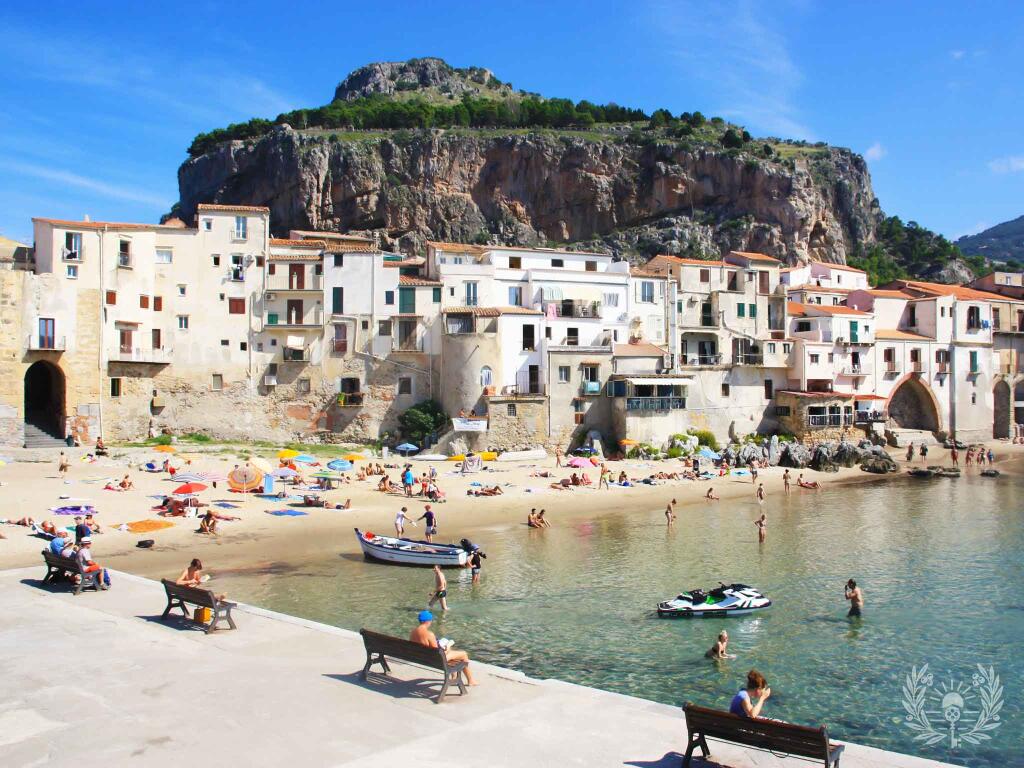
Medieval village centers, chapels and the remains of ancient buildings sit among the mountains. Castelbuono, on the northern edge of the park, is the best-known town and a common base for day trips, while Gratteri lies in the hills above Cefalù. Farther inland, villages such as Petralia Soprana, Polizzi Generosa and Geraci Siculo belong to the same area, and many of them still keep their old local traditions.
Food here has farming roots: cheeses made locally, wines from the surrounding hills and traditional dishes of Sicily's mountain kitchen.
Trails lead through woodland and across meadows up to the summits, cyclists use the mountain roads, and patient visitors can watch for wildlife. Routes vary in demand, so families with children can find suitable walks as well.
The easiest approach to the Madonie is from the direction of Cefalù. A good first stop is the "Pineta di Grotta Grattara" near the village of Gratteri. Castelbuono also works well as a starting or finishing point for hikes.
On the north coast near Palermo, average daily highs (1995–2024) are about 19 °C (66 °F) in April, 23 °C (73 °F) in May, 30 °C (86 °F) in July and August, 27 °C (80 °F) in September and 23 °C (74 °F) in October. Up in the Madonie it is noticeably cooler than on the coast. Spring and fall suit longer hikes, and in midsummer the mountain forests offer shade while the shore is hot.
A search on GetYourGuide lists guided tours, tickets and excursions for Parco delle Madonie and the surrounding area.
Advertising link: if a booking is made through this link, Terra Mia Immobiliare receives a commission from GetYourGuide.
The map comes from OpenStreetMap. Loading it sends your IP address to OpenStreetMap.
Accommodations nearby from the sister portal Sicily Vacation Rentals.


Browse by type: Vacation homes in Sicily · Villas in Sicily · Apartments in Sicily